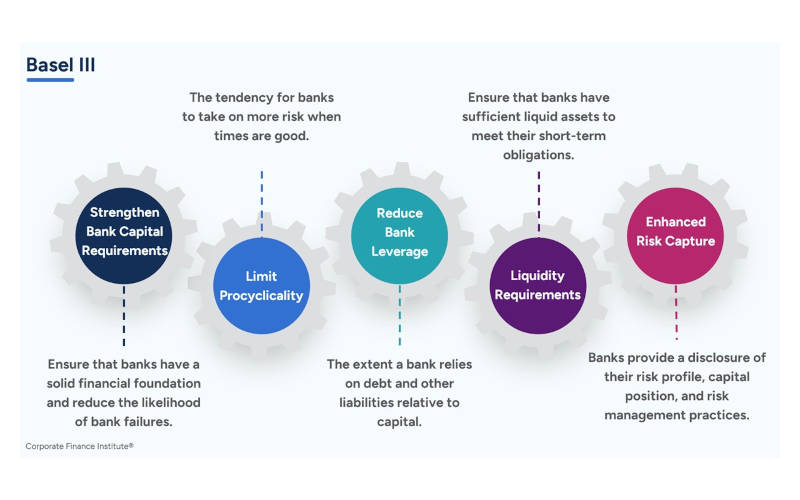
Building a Basel model is one of the most important and regulated activities in banking. Unlike generic predictive models, Basel models directly influence regulatory capital, portfolio strategy, pricing, and risk appetite. Regulators expect these models to be conceptually sound, statistically robust, well-governed, and auditable.
The Journey of Building a Basel Model
Building a Basel-compliant credit risk model is an iterative process that involves multiple stages, from data collection to validation and regulatory approval.
Data Collection and Preparation
The most critical and often the most challenging step is data collection. The quality and availability of data directly impact the accuracy and reliability of the models.
- Identify Data Sources: The first step is the requirement of historical defaults, recoveries, exposures, loan characteristics, borrower demographics, financial statements, macroeconomic indicators, and behavioral scores.
- Internal Data:
- Loan Origination Data: Application details, credit scores, loan purpose or collateral information.
- Performance Data: Payment history, default dates, cure dates, recovery amounts, workout strategies.
- Customer Demographics: Age, income, employment status (for retail portfolios).
- Financials: Revenue, profit, debt-to-equity ratios (for corporate portfolios).
- External Data:
- Credit Bureau Data: Credit scores, debt levels, payment history from other lenders.
- Macroeconomic Data: GDP growth, unemployment rates, interest rates, inflation.
- Industry Data: Sector-specific default rates, business cycles.
- Data Cleaning and Pre-processing:
- Missing Values: Imputation techniques (mean, median, mode, regression imputation) or removal.
- Outliers: Identification and treatment (winsorization, capping, flooring, transformation).
- Data Transformation: Log transformation for skewed data, standardization or normalization.
- Data Harmonization: Ensuring consistency across different data sources.
- Feature Engineering: Creating new variables from existing ones to improve model performance (e.g., debt-to-income ratio, age of credit history).
- Defining Default: Basel II provides a specific definition of default (e.g., 90 days past due, unlikeliness to pay). This definition must be consistently applied across all data and models.
Basel Model Development – Probability of Default (PD)
The PD (Probability of Default) model of Basel estimates the likelihood that a borrower will default over a specific time horizon (typically one year).
- Choosing a Modeling Approach:
- Logistic Regression: A widely used and robust statistical method for binary outcomes (default/non-default). It provides probabilities that are easily interpretable.
- Survival Analysis: This is useful for modeling the time until an event occurs, especially when censoring is present.
- Machine Learning Algorithms: Decision Trees, Random Forests, Gradient Boosting Machines (XGBoost, LightGBM), Support Vector Machines. While powerful, their “black box” nature can make regulatory approval more challenging, so interpretability is the key.
- Variable Selection:
- Univariate Analysis: Initial screening of variables based on their individual predictive power (e.g., Information Value for categorical, correlation for continuous).
- Multivariate Analysis: Stepwise regression, Lasso/Ridge regularization to select a parsimonious set of predictors, addressing multicollinearity.
- Expert Judgment: Incorporating business knowledge to select relevant variables.
- Model Building:
- Training and Testing: Splitting the data into training and testing sets.
- Model Estimation: Fit the chosen model on the training data.
- Calibration: We need to ensure the predicted probabilities are accurate representations of actual default rates. This involves mapping model scores to PDs.
- Performance Metrics:
- Discrimination: How well the model separates defaulters from non-defaulters (e.g., AUC-ROC, Gini coefficient, KS statistic).
- Accuracy: Overall correctness (e.g., accuracy, precision, recall, F1-score).
- Stability: Ensure model predictions are consistent over time.
- Through-the-Cycle (TTC) vs. Point-in-Time (PIT) PD:
- PIT PD: Reflects the current economic conditions and borrower characteristics, often used for IFRS 9 expected credit loss calculations.
- TTC PD: Represents the long-run average default rate of a borrower, abstracting from short-term economic fluctuations. This is typically required for Basel capital calculations.
- Adjusting PIT to TTC: This often involves adding an economic cycle component to the PIT PD or using a multi-year average of PIT PDs, potentially incorporating a stress factor.
Basel Model Development – Loss Given Default (LGD)
LGD represents the proportion of exposure that a bank loses if a borrower defaults.
- Understanding LGD Components:
- Direct Costs: Legal fees, administrative costs, collateral valuation costs.
- Indirect Costs: Opportunity cost of funds, management time.
- Recovery Rates: The percentage of exposure recovered. LGD = 1 – Recovery Rate.
- Data Requirements: Detailed data on defaulted facilities, recovery cash flows, recovery timelines, collateral values, and workout costs.
- Modeling Approaches:
- Regression Models: Linear regression (for continuous LGD), Beta regression (for LGD between 0 and 1).
- Two-Stage Models: Often used to handle the large number of observations with zero losses (no loss given default). The first stage models the probability of any loss (e.g., logistic regression), and the second stage models the LGD given a loss occurred.
- Survival Analysis: Can be used to model the timing of recoveries.
- Key Drivers of LGD:
- Collateral: Type, value, enforceability.
- Seniority of Debt: Secured vs. unsecured, senior vs. subordinated.
- Industry: Certain industries may have higher or lower recovery rates.
- Economic Conditions: Recoveries are often lower in recessions.
- Workout Strategies: Foreclosure, debt restructuring, sale of assets.
- LGD Adjustments: Basel requires conservative LGD estimates. This often involves applying haircuts to collateral values, considering downturn LGD (LGD under adverse economic conditions), and accounting for unexpected losses. Downturn LGD is often derived by scaling up through-the-cycle LGD or by modeling LGD directly using downturn data.
Basel Model Development – Exposure At Default (EAD)
Exposure at default (EAD) estimates the outstanding amount a bank is exposed to at the time of a borrower’s default, especially for revolving credit facilities (e.g., credit cards, lines of credit).
- Understanding EAD: EAD is often the current outstanding balance. For undrawn commitments, it’s more complex.
- Data Requirements: Historical data on credit limits, drawn amounts, undrawn commitments, and utilization rates at the point of default.
- Modeling Approaches:
- Credit Conversion Factor (CCF) Models: Estimate the percentage of the undrawn commitment that will be drawn down by the time of default. CCF is often modeled using regression techniques. EAD = Drawn Amount + (Undrawn Amount * CCF).
- Regression Models: Direct modeling of EAD based on various borrower and facility characteristics.
- Key Drivers of EAD/CCF:
- Type of Facility: Credit cards often have higher CCFs than corporate lines of credit.
- Borrower Characteristics: Creditworthiness, income.
- Economic Conditions: During downturns, borrowers might draw more on their commitments.
- Behavioral Patterns: Historical utilization patterns.
- EAD Adjustments: Basel often requires a conservative approach to EAD, potentially capping CCFs or using higher values for certain facility types.
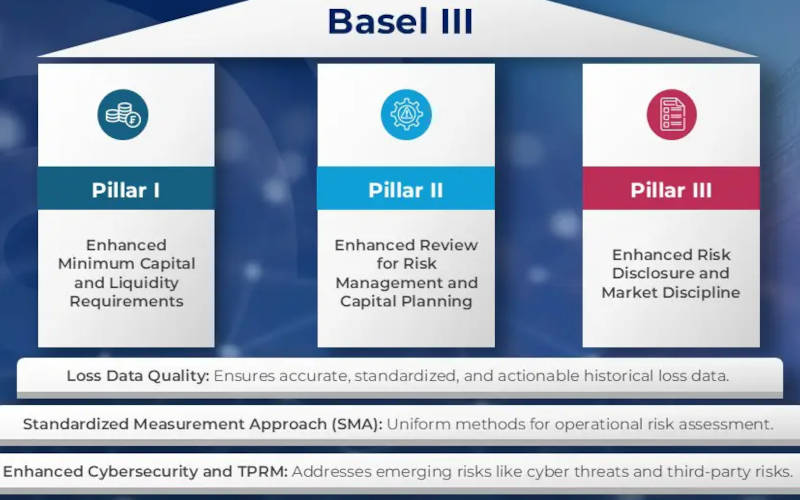
Model Implementation and Infrastructure
Once the models are developed and validated, they need to be integrated into the bank’s operational systems.
- System Integration: Integration of models into the credit origination system, loan management system, and capital calculation engine.
- Data Feeds: Establish robust data pipelines to feed the models with up-to-date information.
- Software Development: Translate statistical models into production-ready code (e.g., Python, R, SAS, C++).
- Performance and Scalability: Ensure the models can process large volumes of data efficiently and within acceptable timeframes.
- Governance Framework: Define clear roles and responsibilities for model ownership, maintenance, and updates.
Validation of Basel Models
Model validation is a continuous and critical process to ensure the models remain fit for purpose and compliant with regulations.
- Independent Validation: This step is crucial in order to get an unbiased view and pinpoint any ongoing findings or process before a model goes live.
- Quantitative Validation:
- Back-testing: Comparing actual default rates, LGDs, and EADs against model predictions over historical periods.
- Benchmarking: Comparing model outputs against industry averages or external benchmarks.
- Sensitivity Analysis: Assessing how model outputs change with variations in input parameters.
- Stability Testing: Evaluating model performance over different time periods and segments.
- Stress Testing: Assessing model performance under hypothetical adverse economic scenarios.
- Qualitative Validation:
- Review of Model Documentation: Ensuring comprehensive and clear documentation of model theory, assumptions, development process, and limitations.
- Data Quality Assessment: Verifying the accuracy, completeness, and appropriateness of data used.
- Expert Judgment Review: Challenging model assumptions and methodologies by subject matter experts.
- Challenger Models: Developing alternative models to challenge the performance of the primary model.
- Regulatory Compliance: Ensure the validation process adheres to the appropriate regulatory guidelines.
Documentation and Regulatory Approval of Basel Models
Thorough documentation is paramount for regulatory approval and ongoing Basel model governance.
- Model Development Document: Comprehensive documentation of the entire model development process, including:
- Model purpose and scope.
- Data sources, cleaning, and preparation.
- Theoretical framework and assumptions.
- Model methodology (algorithms, variable selection).
- Model estimation and calibration.
- Performance assessment and validation results.
- Limitations and weaknesses.
- Usage guidelines and interpretation.
- Model Validation Report: Details the independent validation findings, including strengths, weaknesses, recommendations, and action plans.
- Regulatory Submission: Preparation of a detailed submission package for the relevant regulatory authority (e.g., central bank, supervisory body) is the next important step.
Basel Model Monitoring and Review
Basel models are not static; they require continuous monitoring and periodic review to ensure their continued accuracy and effectiveness.
- Performance Monitoring: Regularly tracking key performance indicators (KPIs) like:
- Actual vs. predicted default rates.
- LGD realizations.
- EAD utilization.
- Discriminatory power (AUC, Gini).
- Stability of characteristic distributions.
- Trigger Events: Define trigger events that necessitate a full model review or re-development (e.g., significant changes in portfolio composition, economic environment, regulatory requirements, or sustained poor performance).
- Annual Review: Conduct a comprehensive review of all models at least annually, assessing performance, data quality, and model relevance.
- Re-development/Re-calibration: Based on monitoring and review findings, models may need to be re-calibrated or re-developed to maintain accuracy and compliance.
Challenges and Best Practices
Building Basel models comes with its share of challenges:
- Data Scarcity/Quality: Especially for low-default portfolios or specific LGD components.
- Regulatory Complexity: Constantly evolving regulations and interpretive guidance.
- Computational Intensity: Large datasets and complex models require significant computational resources.
- Model Risk: The risk of financial loss due to errors in model design, implementation, or use.
- Interpretability vs. Performance: Balancing the desire for highly predictive but complex models with the regulatory need for transparent and interpretable models.
Best Practices:
- Strong Data Governance: Investing heavily in data quality, lineage, and management.
- Cross-Functional Teams: Foster collaboration between risk managers, data scientists, IT professionals, and business units.
- Phased Approach: Break down the model building process into manageable stages.
- Robust Documentation: Treating model documentation as an ongoing activity, not an afterthought.
- Proactive Regulatory Engagement: Maintain an open dialogue with regulators throughout the process.
- Leverage Technology: Utilizing advanced analytical tools and platforms to enhance efficiency and accuracy.
- Continuous Learning: Staying updated with the latest modeling techniques and regulatory changes.
Conclusion
Building a Basel-compliant credit risk model not only ensures regulatory compliance and optimal capital allocation but also provides a deeper understanding of a bank’s risk profile. The journey from data collection to model monitoring requires meticulous attention to detail, a robust analytical framework, and a commitment to continuous improvement. By following these structured steps, credit risk professionals can navigate the complexities of Basel modeling and contribute significantly to their institution’s financial resilience and strategic decision-making.